Meta / Contents
Time, Not Safety
Two of the most powerful people in computing published essays weeks apart asking the world to slow down or brace for impact. I read them as someone who was terrified of losing his job to AI, bet on himself, and landed on his feet. The bet bought time, not safety.
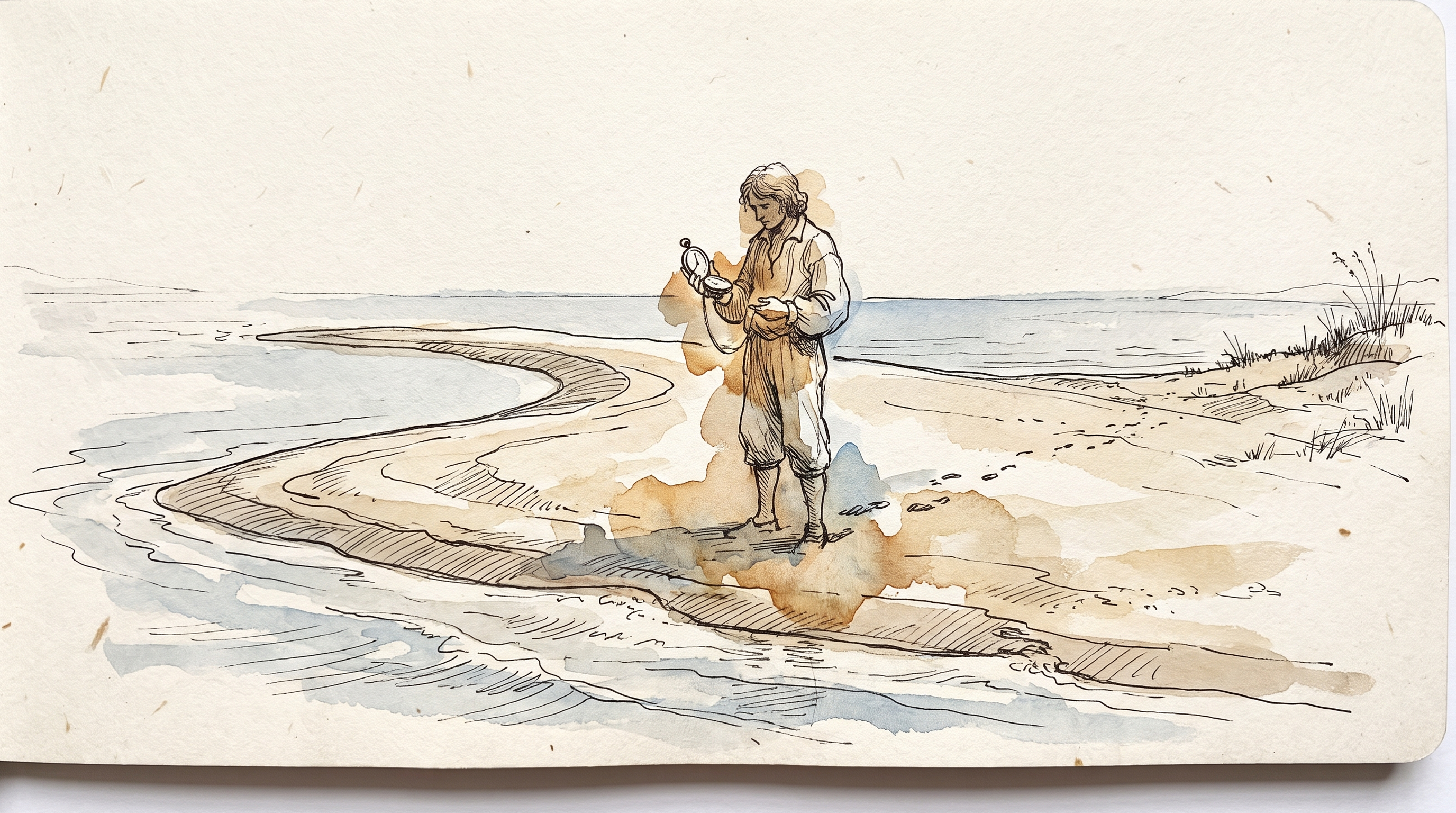
Two essays, seventeen days
On August 26, Bill Gates published a 6,000-word essay called The turbulent AI era is here. The choices we make now are critical. The line everyone quoted is that AI "will either be the greatest equalizer ever invented, or the worst source of injustice." In the video that went with it he said something blunter. There is "not even a plan to have a plan."
Seventeen days later, Dario Amodei published We Must Pace the Frontier. The first sentence is the whole argument: "We must slow the pace at which we improve the capabilities of AI models." Within hours Sam Altman agreed, Elon Musk posted "Dario is right," and Demis Hassabis called the direction correct while noting the details need work. TechCrunch has the roundup. Sundar Pichai had said a softer version on the BBC last December: "we will have to work through societal disruption."
So four of the most powerful people in computing, three of whom are actively building the thing, are on record asking for a slowdown or bracing for impact. That's new. Two years ago the public posture was full speed ahead and mind the gap.
Here's what struck me reading them back to back. They barely overlap. Amodei's essay is about catastrophe: losing control of models, cyberattacks, bioterrorism. Jobs get one clause, "serious economic disruption," and then he moves on. Gates's essay is mostly about paychecks, kids, and institutions. He says out loud that if anyone had a credible plan to slow AI down globally he'd support it, but he doesn't think it's going to happen.
Neither essay is about a specific person's Tuesday. I want to write about mine, because I was the person they're describing, about a year early.
The embarrassing afternoon
I spent three decades in enterprise technology consulting, the last dozen years of it as a solutions architect in B2B commerce. The full client-by-client record is on my profile if you want it. The moment that convinced me my job was in trouble wasn't a headline or a demo at a conference. It was a sales-support exercise, the kind of technical discovery and pre-sales work I'd owned for years.
A deal needed an architecture. Normally that's days of work. Gather my thoughts, pull the patterns I've used before, adapt them to this client's stack and constraints, and produce documentation someone can put in front of a buyer. Instead I gave the tools of the day some context specific to the deal, supplied oversight from experience, and read what came back.
It was good. Not draft good. Client-ready good. The effort on my side was embarrassingly small compared to what it would have taken me by hand.
What made it land wasn't the quality. It was the realization of what a solutions architect mostly does. We reapply repeatable patterns to a new context. That's the job, and I'd been proud of being good at it for a long time. The tool had just done the repeatable-patterns half in minutes, and the new-context half was a paragraph of prompt.
It convinced me. No slow dread over months of headlines. One afternoon.
Hobbit season
What I did next has a LinkedIn version and a real version. The LinkedIn version is "I invested in myself." The real version is that I became a hobbit.
At the peak I was putting in twenty-plus hours a week on top of the day job. Nights, weekends, and then Composer running unsupervised overnight tasks while I slept, so the lab was working more hours than I was. I built Leaderboard Fantasy, TutorPro, AI Labs, and the factory that builds them, and I wrote about all of it here.
It cost money. My tool and hosting spend is north of $400 a month right now, between a maxed-out Claude subscription, Copilot moving to usage pricing, and the Agent Platform bill in Google Cloud. I need to sit down and decide whether I still need all of it. I probably don't.
It happened during a stretch when the household had plenty going on already. We sent a kid off to college. We downsized the house. The boys started high school. The circle got smaller during that period. I'd also say it got stronger, and it's stayed that way.
The tools were the easy part. The hard part was unlearning who I'd been. Over three decades I'd been a developer, a lead, a consulting-practice VP and partner, and for the last dozen years the SAP Commerce architect with a defensible pattern library. Those were good things to be. They were also exactly the things the afternoon had told me were about to get cheap. I wrote about that grief in Hold It Loosely and I won't repeat it, except to say the technical retraining took months and the identity retraining is still in progress.
The door opened from the outside
I didn't apply my way into agentic engineering. The door opened because someone was watching.
A former client leader had joined Madhive in a leadership role about six months before me. They'd been following the posts here and the LinkedIn shares. A couple of conversations and a demo of Composer later, they made a strong referral into the org.
I still had to run the gauntlet of interviews. What got me through was the same thing that got me the referral. I used the tools to tell the story to different audiences, and I could show the work rather than describe it.
Nobody hired the SAP Commerce architect. They hired the lab. That's the part I'd underline for anyone reading this from the consulting side. The public work was the resume.
What the essays say, and what they skip
Read both. Amodei proposes three steps. Embedded evaluators, meaning third parties with "ongoing access to permissions and tools similar to those of internal employees." Coordinated safety standards among the frontier labs in democracies. Then a longer shot at coordination with authoritarian governments. His reason for urgency is that "since roughly this summer, AI has been advancing drastically faster, driven primarily by AI's growing ability to build the next generation of AI." Models building models.
Gates goes where Amodei doesn't. He leans on a Stanford study that found employment fell among early-career workers in AI-exposed jobs after generative AI arrived, and stayed flat for their older colleagues. Canaries in the coal mine. He lists the first jobs he expects to go: sales and customer support, paralegal work, and software engineering. He proposes setting some jobs aside as "Human Reserved," the way we set aside land. He proposes taxing tokens and robots to fund retraining. He wants national coordinating bodies and eventually a global one.
The Human Reserved idea stuck with me more than I expected. He tells the story of the caregivers who looked after his father through Alzheimer's, and says something in that care was "irreplaceably human." I don't know what I'd put on my list. I know software architecture isn't on it.
The two essays are answers to different questions. Amodei is asking how we avoid a disaster. Gates is asking how we survive the success. Both are worth an hour of your time. Neither one tells you what to do on Monday.
Where I raise an eyebrow
I'm undecided on pacing, and I'm a little skeptical of everyone asking for it, including the company that makes my daily driver.
I'm going to keep this out of politics, because it isn't political for me so much as a habit of mind. I believe in the free market. There's a lot of prior art on control regimes that mostly got in the way and turned into wasteful spend. When Gates proposes a new global body "unlike any other institution we have ever created," my first reaction is that we haven't finished fixing the ones we have.
There's also a motive question that neither essay raises. The best Chinese models are months behind the frontier and cost a fraction as much to run. A slowdown at the top has a financial upside for the labs asking for it. Amodei is candid that he'd only slow down by an amount that keeps "CCP-associated projects" from pulling ahead. Fair enough. Just notice that the brake pedal and the balance sheet point the same way.
So what would I keep? The evaluators. Outside people with employee-level access, publishing what they find, is transparency. Transparency is the one intervention that makes markets work better rather than worse. Beyond that I'd let competition set the pace. If a model at ninety percent of the cost is really only months behind, that pressure will discipline the frontier labs harder than any regulator.
The money Gates wants for institutions, I'd put into people. Apprenticeships. The on-ramps that entry-level jobs used to be. The Stanford data says the canaries are 22 to 25, and no coordinating body is going to hire them.
That's not a complete plan. I don't have one either, and I'd rather say so than pretend.
The bet bought time, not safety
Here's the part I've been avoiding. The pivot worked. I'm a Software Tech Lead at Madhive now, building product rather than consulting on it, which is the job I wanted. It exists because of the hobbit years. It would be easy to end the post there and let you think I'd figured it out.
I don't think I'll be needed long term. I want to write that down while it's still uncomfortable.
Three reasons. First, I've watched my own leverage decay. Most of the custom workflow I built ships in the box now, weeks or months after I built it. Orchestrator is a job title with a half-life too.
Second, the judgment gap is closing faster than I expected. I use LLMs as a design reviewer whenever I have a new idea or an architectural change. Some ideas we mold together into something that makes sense for the platform. Some ideas the model tells me have no actual benefit, and it's right. When change is this cheap, the trap is change for change's sake, and the thing that stops me from falling into it is often the tool, not me. The critical viewpoint I thought I was bringing to the table is increasingly supplied by the thing I'm supposed to be supervising.
Third, Amodei's recursive self-improvement changes the math. If models have been building the next models since summer, then human-on-the-loop is a phase, not a destination. My job right now is to keep custody of the taste. I don't assume that's a permanent post.
None of that makes the bet wrong. It bought me time, and time turns out to be what I needed. It just didn't buy safety, and I'd be lying to myself if I confused the two.
Read the essays, then look at your own week
Both leaders are writing about abstractions. Institutions, coordination, reserves, taxes. Those matter, and I'm not qualified to design any of them.
The lever you hold is smaller. It's your evenings this month. What you're learning, what you're building, who's watching you do it.
I moved before I was moved. I got lucky that someone noticed. That's the whole recommendation, and I'd give it to the version of me from that embarrassing afternoon without hesitation.
–Jeremy